The Collaborative Centre brings together research, Lived and Living Experience, practice and policy to help build a mental health and wellbeing system that learns, adapts and improves.

Through our translational research program, we support research to move into real-world settings and help ensure evidence can inform treatment, care, support, policy and practice. Explore our approach, projects, people and partnerships, and opportunities for students and emerging researchers.

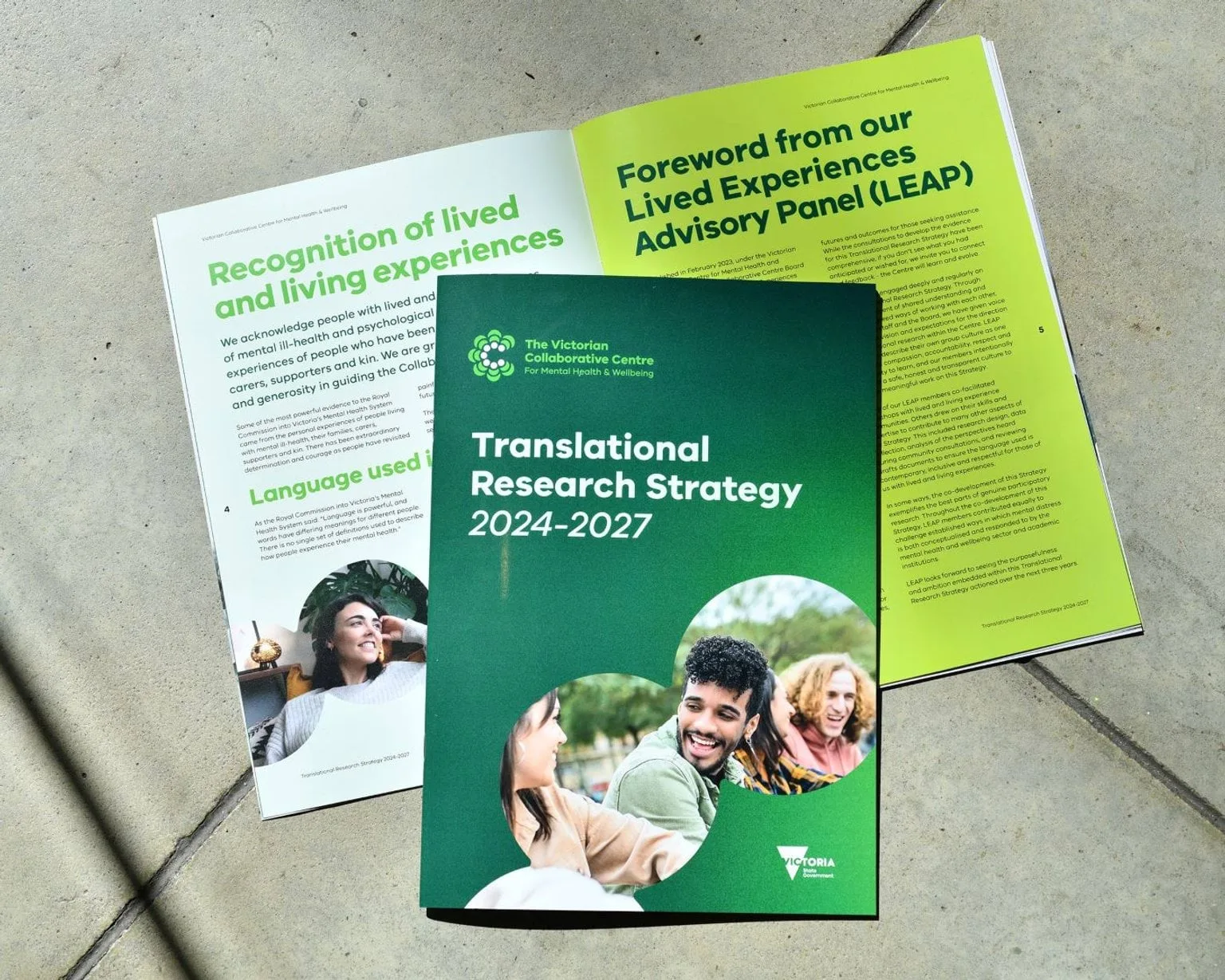
Our Translational Research Strategy 2024–2027

The Collaborative Centre is incredibly proud to launch Victoria’s first Translational Research Strategy 2024-2027.

On average, it takes 17 years for research findings to be translated into improved treatment, care, and support for people accessing our mental health and wellbeing services.

Our Translational Research Strategy 2024-2027 will address this gap by embedding collaboration between researchers, mental health practitioners and people with lived and living experiences in the locations where care is provided, to improve outcomes for consumers, carers, family, supporters and kin.

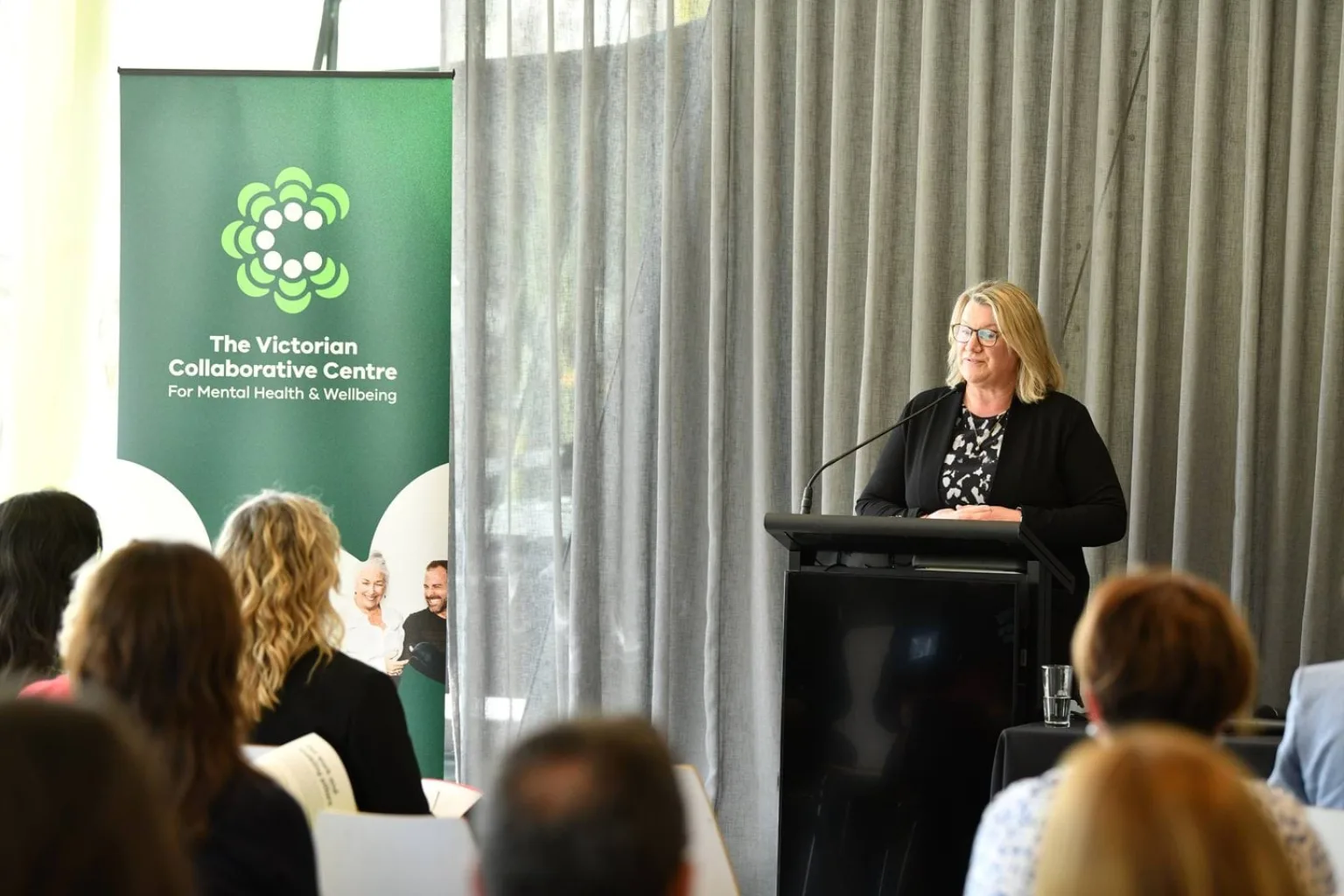
Our strategy was launched by Ingrid Stitt MP, Minister for Mental Health, who spoke about the role of the Collaborative Centre as an ‘engine room’ for system transformation.

Launching our Translational Research Strategy

The Translational Research Strategy was developed with contributions from hundreds of people across Victoria's mental health and wellbeing system, including people with Lived and Living Experience, researchers, practitioners and sector partners.

At the launch of the Strategy, then Co-CEO Carolyn Gillespie spoke about the importance of people with Lived and Living Experience as leaders and co-designers of the Collaborative Centre's work.

“We can harness this wisdom to lead the redesign and delivery of mental health and wellbeing services so that they are safe and responsive to our needs, and we can lead and participate in quality and ethical research that is implemented in practice for real and lasting change,” she said.

Professor Sarah Wilson, now CEO of the Collaborative Centre, spoke about the importance of connecting research with practice and using evidence to continually improve treatment, care and support.

“In our daily work, we need to pause and reflect on the evidence that underpins our thinking and practice in how we are delivering care,” she said.

The ambition of the Strategy is deeply human-centred, informed by the voices of people with Lived and Living Experience and focused on creating real and lasting change for Victorians.
DSC_0595.jpg

Ingrid Stitt MP, Minister for Mental Health

Our strategy was launched by Ingrid Stitt MP, Minister for Mental Health, who spoke about the role of the Collaborative Centre as an ‘engine room’ for system transformation.

Latest research

Swipe through and read summaries from our latest research.

Elimination of restrictive practices from acute adult mental health care services: A qualitative evidence synthesis of the lived experience literature

This qualitative evidence synthesis explores the perceptions and experiences of mental health service users and practitioners regarding the use and proposed elimination of restrictive practices, such as seclusion and physical/mechanical restraint, in acute adult mental health care services.

The appropriateness of DUNDRUM-3 and DUNDRUM-4 for Maori in forensic mental health services in New Zealand: participatory action research

The Auckland Regional Forensic Psychiatry Services (ARFPS) in New Zealand has introduced structured clinical judgment instruments developed in Ireland (DUNDRUM-3 and DUNDRUM-4) to assist staff decision-making regarding service users’ clinical pathways. In New Zealand, Māori (the indigenous people) constitute 43% of the in-patient forensic mental health population. The aim of this study was to determine the face validity of the measures for Māori.